
The Shortstop's Mind Game: Why the Infield Captain Has to Think Before Every Single Play
Kenny Flermoen · Founder & Academy Director, Mind Game Baseball Academy · 15 min read
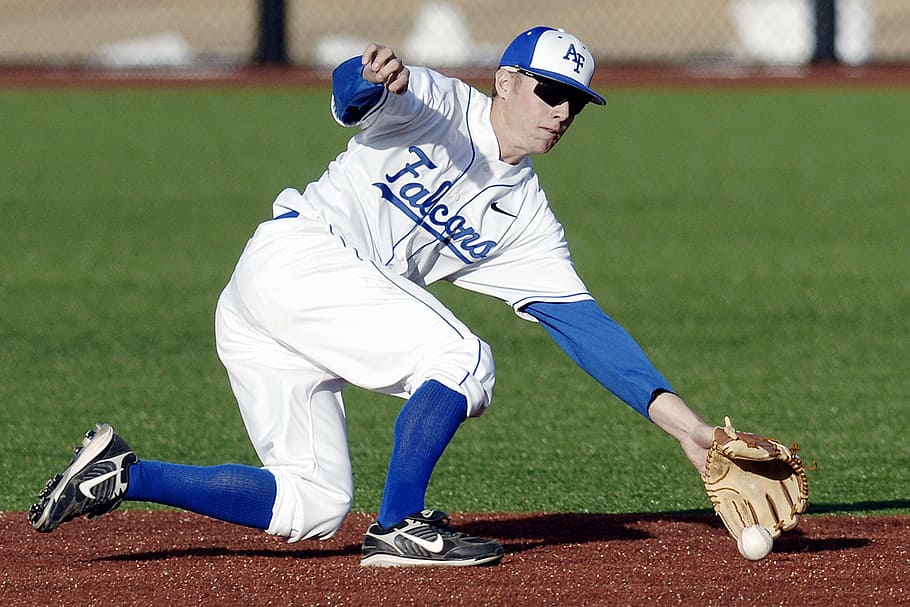
In the pitcher chapter, I wrote about the loneliest position on the field, a player exposed on every pitch with no cover and no time between mistakes. This chapter is about the opposite problem. The shortstop is not alone. He is surrounded by teammates on every side, and his job is to be the one thinking for all of them.
Of every position on a baseball field, the shortstop carries the highest pre-pitch decision load of any player who is not on the mound. Before every single pitch, a shortstop has to know the count, the outs, the runners, the hitter's tendencies, where every infielder needs to be, who is covering second on a steal, who is taking the relay throw from the outfield, and where the ball needs to go if it comes to him on the ground, in the air, or somewhere in between.
That is not an exaggeration. That is the actual job description of the position, pitch to pitch, for every inning of every game. And in most youth baseball environments, none of it is taught explicitly. A kid is told to play shortstop and pointed at the hole between second and third. What happens before the pitch is his problem to figure out.
This chapter is about what the shortstop's Mind Game actually looks like and how to coach it with real specificity, by age, by situation, and by the exact decisions that separate a shortstop who makes the field better from one who is simply occupying the position.
Why the Shortstop Is the Infield Captain
Every baseball team has a dugout leader, usually the catcher or the most experienced position player. But on a baseball field, during a play, there is only one player positioned to see the entire infield, direct every other fielder, and make the split-second communication call that determines how a play is defended. That player is the shortstop.
The shortstop can see the second baseman, the third baseman, the first baseman, the outfielders, and every baserunner simultaneously. No other infielder has that vantage point. The third baseman is watching the hitter. The second baseman is turned toward the bag. The first baseman is holding a runner or watching the pitch. The shortstop is the one player in the infield who, by virtue of where he stands, has the complete picture of what is happening on the field at any given moment.
That vantage point comes with responsibility. A shortstop who is not using it, who is standing in position without processing the situation, watching the pitch without thinking about what happens if the ball is hit to him in the next half second, is wasting the most important piece of real estate in the infield. A shortstop who is using it is directing traffic, communicating with teammates, shading into position before the pitch, and arriving at every play having already decided what comes next.
The difference between those two players is almost entirely The Mind Game.
The Pre-Pitch Checklist Nobody Teaches
We established in The Mind Game: Why Most Youth Players Are Never Taught to Think the Game that situational awareness before the pitch is the foundation of every good defensive play. At shortstop, that pre-pitch process is more complex than at any other position except catcher, and it happens in roughly five seconds between pitches.
Here is what it actually looks like when it is being done correctly.
The count. A 1-2 count with a right-handed hitter is a completely different defensive picture than a 3-0 count with the same hitter. On 1-2, the pitcher is likely going to expand the zone or throw something off-speed to chase. The shortstop can cheat slightly toward the pull side because a hitter protecting with two strikes is more likely to make contact on the inner half. On 3-0, the pitcher is throwing a fastball over the plate and the hitter may be taking, which means the shortstop should be ready for a pitch the hitter is likely to drive when he does swing.
The outs. One out with a runner on first means a potential double play is in play on any ground ball. The shortstop needs to know before the pitch whether he is in double play depth, which means playing slightly closer to second base than his standard position, or in standard depth where he has more range but a longer throw to initiate the double play.
The runners. Where are they, and are they moving? A runner on first with a right-handed pull hitter means the shortstop should be shading toward second to cover on a potential steal or to take the throw on a ground ball that pulls the second baseman toward first. A runner on second with a left-handed hitter means the shortstop needs to be thinking about the third base line because a ball hit that way with a runner on second is a different play than the same ball with nobody on.
Who is covering second. On any pitch with a runner on first or second, the shortstop and second baseman need to have a verbal or visual agreement about who is taking the bag on a steal attempt or a ground ball that pulls the other fielder out of position. This communication happens before the pitch, not after the runner breaks. A shortstop who does not know who is covering second before the pitch is reacting to a situation he should have already resolved.
Where the ball is going if it comes to him. This is the piece that most separates Mind Game shortstops from average ones. Before every pitch, the shortstop should have already decided where the throw is going on a ground ball hit directly at him. Not figuring it out while the ball is in the glove, not looking around after the catch to determine where to throw. Decided. Before the pitch. The decision happens in the five seconds between pitches, not in the three seconds between the ball being hit and the ball being caught.
Communication Is Half the Job
A shortstop who processes all of the above silently and never communicates any of it to the rest of the infield is doing half the job. The other half is making sure every player around him is positioned correctly and on the same page before every pitch.
This is the piece that gets skipped most in youth baseball because it requires players to talk, loudly and specifically, in a way that feels unnatural when nobody has ever modeled it or required it. Most youth infields are quiet between pitches. Professional infields are not. Every pitch, somebody is communicating something. Where to go on the ball. Who is covering. Whether the shift is on. What the play is on a bunt. That communication is not accidental on professional fields. It is a standard, practiced expectation of every player in the infield, and it starts at shortstop.
Teaching communication at shortstop starts with making it a non-negotiable expectation in practice before it is ever required in a game. Before every rep in infield practice, the shortstop calls out the situation: "Runner on first, one out, double play if we can get it, first and second otherwise." Every other infielder confirms. The ball is hit. Now the shortstop is not inventing the communication under game pressure. He is repeating a habit that was built in practice.
I am willing to say this directly: a shortstop who will not communicate is a shortstop who is not ready to play shortstop. The position is fundamentally a communication role. The fielding is real and it matters, but a shortstop who fields every ball cleanly and never directs his infield is leaving the most important part of his job undone.
Making Plays From Difficult Body Positions
The shortstop is asked to make throws from more varied and difficult body positions than any other infield position. The play going into the hole toward third, the backhand stop behind second base, the throw across the diamond from deep left, the up-the-middle ball that requires a backhanded stab and a cross-body throw, all of these are real plays that happen in real games, and all of them require a combination of physical execution and Mental Game decision-making to complete.
The decision-making piece on difficult body position throws is this: the shortstop has to make a real-time judgment about whether the throw he can make from this body position, at this angle, at this distance, is a throw he can actually complete accurately under game conditions. Not the throw he wants to make. The throw he can make right now, from right here, with his feet in the position they are in.
A shortstop who has never been coached on this will try to make the same throw from every body position he fields from, which produces wild throws, pulled first basemen off the bag, and errors that did not need to happen. A shortstop who has been coached on it knows that sometimes the right play is eating the ball on a late throw rather than firing it across the diamond with no chance of being accurate, especially with nobody on base, two outs, and a throw that might sail into the dugout.
This is a real Mind Game concept: the shortstop's ego about making the throw has to be subordinate to his actual judgment about whether the throw is going to be accurate. Teaching that subordination, which runs counter to the competitive instinct to always try for the out, is one of the more specific coaching conversations I have with shortstops at every age.
Coaching the Shortstop's Mind Game by Age
Ages 9 to 11: Situation First, Everything Else Builds On It
At this age, the goal is not the full pre-pitch checklist. It is one habit: knowing the count and the outs before every pitch. If a shortstop in this age group can tell you, without being asked, what the count is and how many outs there are on every pitch, they are already ahead of most of their peers and they have the foundation the rest of The Mind Game gets built on.
Keep communication simple at this age. "Two outs, hit it anywhere" is enough. Do not try to install the full communication system at 10. Build the habit of speaking at all, then layer in the content over time.
Ages 12 to 14: Add Runners, Positioning, and Who Covers Second
This is the window where the full pre-pitch process becomes teachable. Players at this age have enough game experience to actually apply multi-variable thinking between pitches, and they are playing at a level where the situations are real enough that they can feel the difference between being prepared and not being prepared.
At 12 to 14, I start requiring the full situation call before every infield rep in practice. Count, outs, runners, who covers second. Every rep. Without exception. Over a full season of reps built this way, the process becomes automatic rather than effortful.
I also start having real conversations at this age about body position throws and when the right play is not to throw. A 12-year-old shortstop who has been coached to make good decisions about when to throw and when to hold it will make fewer errors by 14 than one who was never taught the concept at all.
Ages 15 and Up: Read Swings, Shade in Real Time, Direct the Defense
At this level, the shortstop should be doing everything described above automatically and adding another layer: reading the hitter's swing and adjusting position in real time during an at-bat, not just between at-bats.
We covered reading swings in The Mind Game: Why Most Youth Players Are Never Taught to Think the Game. At shortstop specifically, this means watching a hitter's previous swings in the at-bat and making a one-step shade during the at-bat based on what those swings are telling you. A hitter who was late on the last fastball is more likely to be pulled off a similar pitch this time, which means the shortstop might cheat a step toward the pull side. A hitter who fouled a ball straight back is timing the pitch well, which means no adjustment yet.
This is advanced. It requires real baseball maturity. But at 15 and up, in competitive travel ball environments, this is the level of thinking that separates the shortstop who gets recruited from the one who gets overlooked despite having similar physical tools.
The Position That Makes the Whole Infield Better
Here is the honest summary of the shortstop's Mind Game: it is not just about making the shortstop better. It is about making the entire infield better, because a shortstop who is processing the situation, communicating clearly, and directing traffic before every pitch raises the defensive floor of every player around him.
A second baseman playing next to a shortstop who calls out coverage assignments before every pitch never has to wonder who is taking the bag. A third baseman next to a shortstop who shades into the right position before the pitch gets an extra half step of range on balls hit between them because they are not both cheating the same way. A first baseman who trusts that the shortstop has already thought through the play knows what to expect when the throw comes.
That ripple effect is real, and it is what the best shortstops in the game have always provided, not just range and a strong arm, but the organizational intelligence that makes a defense function as a unit rather than five individuals all reacting independently.
That is The Mind Game at its most complete expression. And it is exactly the kind of thinking this academy is built to develop.
The next chapter in this series moves from the infield to the hitter's box, covering the at-bat itself as a sequence of mental decisions rather than a single swing, which is how the best hitters in the game actually approach it.
Register your player or book a defensive skills evaluation to see what coaching that develops the full Mind Game at shortstop actually looks like.
Frequently Asked Questions
Why is the shortstop considered the infield captain? The shortstop is the only infield position with a complete view of every other fielder, every baserunner, and the entire field simultaneously. That vantage point makes the shortstop the natural director of infield communication, coverage assignments, and positioning adjustments before every pitch. No other position player has the same combination of visibility and centrality to make those calls effectively.
What should a shortstop be thinking about before every pitch? At minimum: the count, the outs, which runners are on base, who is covering second on a steal or ground ball, and where the throw is going if the ball is hit directly at him. More advanced shortstops also read the hitter's tendencies, shade their position accordingly, and direct the rest of the infield into position before the pitch is thrown.
How do you teach a youth shortstop to communicate with the rest of the infield? Make it a non-negotiable expectation in practice before requiring it in games. Before every defensive rep, the shortstop calls out the situation including outs, runners, and coverage assignments, and every other infielder confirms. Running this on every single rep over a full season builds the communication habit until it becomes automatic under game pressure.
When is the right time for a shortstop NOT to make the throw after fielding a ground ball? When the body position, angle, or distance makes an accurate throw unlikely under real game conditions. A throw that sails into the dugout or pulls a first baseman off the bag is almost always worse than holding the ball, especially with nobody on base and a force play already secured. Teaching a shortstop that good judgment about when not to throw is a real skill, not a failure of competitiveness, is one of the more valuable and undercoached conversations in youth baseball.
At what age should a player start learning to play shortstop with this level of situational awareness? Basic situation awareness, knowing the count and outs before every pitch, can begin as early as 9 or 10. Full pre-pitch communication including coverage assignments and positioning is most effectively introduced around 12 to 13. Reading swings in real time during an at-bat and adjusting position accordingly is an advanced skill most appropriate for players 15 and up with significant competitive experience behind them.
Kenny Flermoen is the Founder and Academy Director of Mind Game Baseball Academy, based in North Augusta, SC. He brings 21+ years of coaching experience from tee-ball through Division I, a B.S. in Sports Management, and a Master's degree in Coaching and Athletic Administration from Concordia University-Irvine.
Related posts