
How to Teach a Kid to Throw a Baseball Correctly From the Start
Kenny Flermoen · Founder & Academy Director, Mind Game Baseball Academy · 13 min read
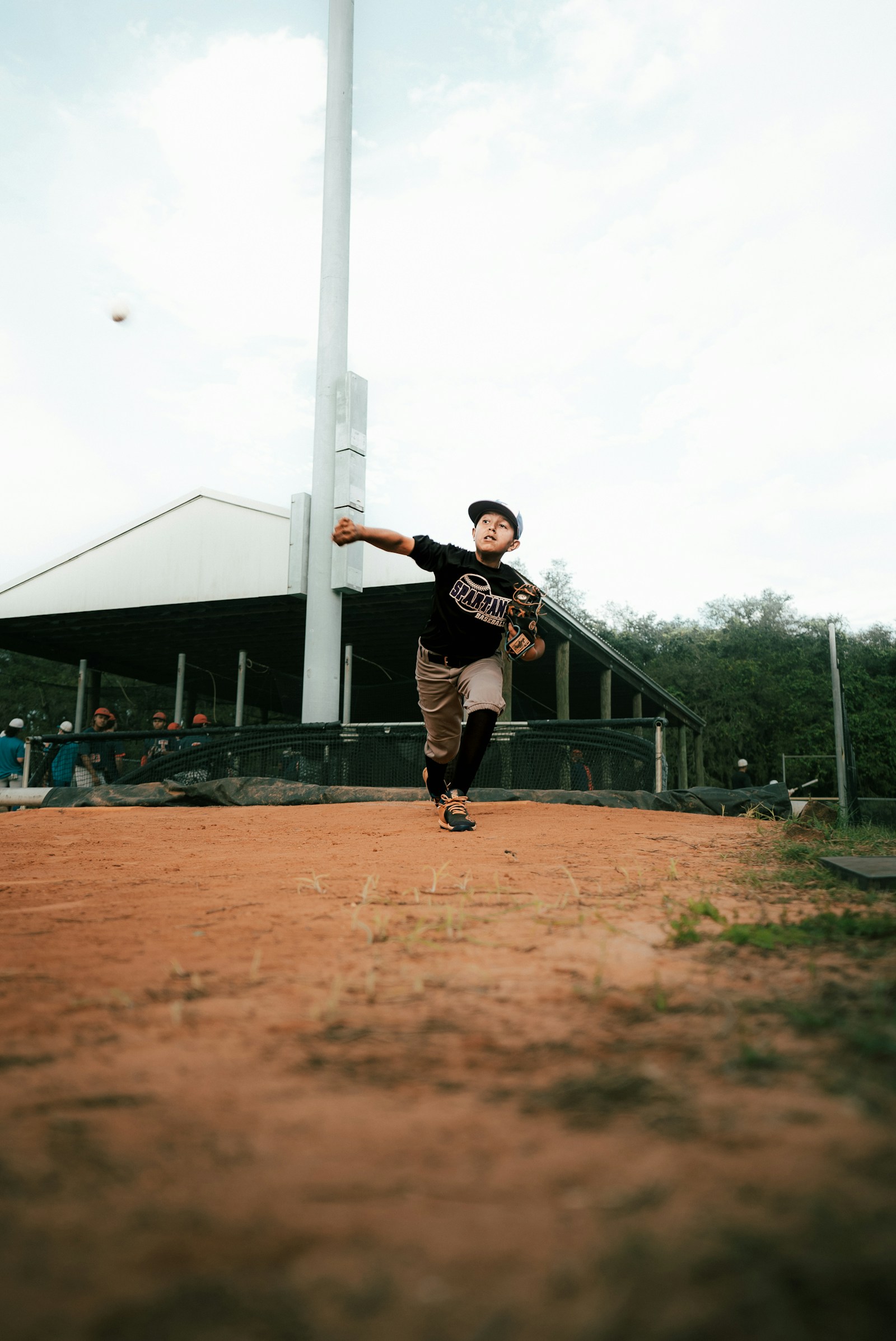
Defense is the most underdeveloped skill set in youth baseball today. Walk into any rec league game or travel ball tryout in the CSRA and you will see the same thing: a field full of kids who have taken thousands of swings and almost no one who has been taught to throw correctly.
That is not an accident. Hitting gets the attention, the lessons, the cage time, and the YouTube tutorials. Throwing gets five minutes of long toss before practice and whatever arm action the kid figured out in the backyard at age six.
The problem is that throwing mechanics, more than almost any other skill in baseball, need to be established early and established correctly. Bad habits in the throw do not just limit a player's accuracy and arm strength. They create compensation patterns that lead to injury. A kid who throws with poor arm action at 9 is a kid with elbow and shoulder problems at 15 if nobody intervenes.
This post is about how to intervene early and do it right.
Why Throwing Is the Most Important Skill Nobody Is Teaching
Every position on the baseball field requires throwing. Not every position requires hitting at a high level to contribute, but every single position requires the ability to throw with accuracy, arm strength, and repeatability under pressure.
A shortstop who cannot make the throw across the diamond is not a shortstop regardless of how well he hits. A catcher who cannot throw to second base does not play. An outfielder who cannot cut down a runner at the plate becomes a liability the other team exploits all game long.
And yet in most youth baseball environments, throwing instruction is an afterthought. Coaches set up stations for hitting. They run infield drills. But structured, sequential throwing instruction, starting with grip and arm action and building through footwork and follow-through, is rare at the youth level.
That gap is why defensive skills across youth baseball have declined. It is also an opportunity. A player who receives quality throwing instruction early has a significant advantage over the field, because most of their peers never got it.
The Foundation: Grip
Everything in the throw starts with how the ball sits in the hand. This is the step most coaches skip because it seems too basic. It is not basic. It is the foundation.
The Four-Seam Grip
Teach every young player to find a four-seam grip before every throw. The four-seam grip positions the fingers across the widest part of the horseshoe seams, with the index and middle fingers on top and the thumb underneath. The ring and pinky fingers rest lightly on the side.
This grip produces backspin, which means the ball travels on a true plane, fights gravity longer, and arrives with the accuracy and carry needed to make throws across a diamond or from the outfield.
A two-seam grip, a seam-less grip, or whatever grip a kid defaults to without instruction will produce inconsistent spin, inconsistent accuracy, and a ball that cuts or sinks unpredictably.
Teaching the four-seam grip to young players:
Hold the ball with just the fingertips, not deep in the palm. There should be a small gap between the ball and the palm. A common check is to see whether you can slide a pencil between the ball and the hand. If you can, the grip is correct. If the ball is buried in the palm, it is not.
Practice the grip away from throwing at first. Let young players find the seams by feel while sitting, during warmups, or in the dugout between innings. Building the habit of finding the four-seam grip before every throw takes time but becomes automatic with repetition.
Arm Action: The Part Everyone Gets Wrong
Arm action is the single most misunderstood component of throwing mechanics in youth baseball. It is also the component most likely to produce injury when it goes wrong.
What Good Arm Action Looks Like
A proper throwing motion follows a path that is sometimes described as "down, back, and up." As the ball leaves the glove, the throwing hand moves downward and back behind the body, the elbow rises to shoulder height or above, and the arm accelerates forward and through to release.
The key checkpoint most coaches miss is elbow height at the power position, the moment just before the arm accelerates forward. The elbow should be at or above the shoulder. When the elbow drops below the shoulder at this point, the arm is in what coaches call an "inverted W" or "short arm" position, and the stress placed on the elbow and shoulder increases significantly.
What Bad Arm Action Looks Like and Why It Develops
The most common arm action flaw in youth players is short-arming: the player never fully extends the arm back and down, instead bringing the ball up in a short, pushing motion directly from the glove. This develops because it is faster and feels more natural, especially when a young player is trying to make a quick throw under pressure.
Short-arming reduces velocity, reduces carry on the ball, and puts abnormal stress on the forearm and elbow. A player who short-arms every throw from age 8 to 14 is building toward an injury.
How to correct short arm action:
The most effective drill is the wrist flick drill: the player kneels on one knee and throws to a partner using only wrist and forearm movement from 10 to 15 feet. This isolates the release point and builds the feel of proper finger pressure and spin before adding the full arm path.
From there, progress to the arm circle drill: standing, the player makes a full, exaggerated circle with the throwing arm before each throw, ensuring the arm goes fully down and back before coming forward. The exaggeration trains the full range of motion that gets compressed under game pressure.
Footwork: Where Most of the Accuracy Lives
Ask a youth coach what causes throwing errors and most will say the arm. They are usually wrong. Most throwing errors in youth baseball come from the feet, not the arm.
Footwork on a throw determines hip alignment, momentum direction, and release timing. A player with great arm action and poor footwork will still throw poorly. A player with average arm action and excellent footwork will throw accurately and consistently.
The Basic Throwing Footwork Sequence
Regardless of position, the fundamental footwork sequence for a throw is the same:
1. Field the ball or receive the ball cleanly. Nothing in the throw works if the catch is poor. Footwork starts with a clean reception.
2. Step toward the target. The front foot steps directly toward where the throw is going. Not angled, not across the body. Directly at the target. This aligns the hips and shoulder to where the ball needs to go.
3. Generate momentum toward the target. The weight transfers from the back foot through the step, creating forward momentum that adds velocity to the throw without adding arm stress.
4. Follow through. The throwing arm continues across the body after release. A throw that stops at release rather than following through loses velocity and accuracy and puts stress on the shoulder.
The most common footwork error in youth players is stepping across the body rather than toward the target. When the front foot steps to the left (for a right-handed thrower) instead of at the target, the hips open incorrectly and the throw is almost always offline.
Teaching Throwing by Age
The approach to throwing instruction changes significantly across the developmental stages.
Ages 5 to 8: Movement Patterns Over Mechanics
At this age, the goal is not perfect mechanics. It is building movement pattern, comfort with the ball, and love of playing catch. Throwing should be fun. Long technical instruction sessions kill both.
Focus on two things at this age: finding the four-seam grip, and stepping toward the target. Get those two habits started and let everything else develop through repetition and play.
Keep distances short. Throwing at appropriate distances for the arm strength available develops the right habits. Throwing too far too young produces short-arm action, which becomes a deeply grooved problem.
Ages 9 to 12: Build the Foundation
This is the window where throwing mechanics need structured attention. Players at this age have enough body awareness to understand and apply mechanical instruction, and the habits formed here will largely define their throwing for the rest of their career.
Priorities at this stage: four-seam grip, full arm action with elbow above the shoulder at the power position, and footwork that generates momentum toward the target. Add the wrist flick drill and arm circle drill to regular practice.
Introduce the concept of a pre-throw routine: receive the ball, find the grip, set the feet, throw. That sequence, practiced hundreds of times at this age, becomes automatic under pressure.
Ages 13 to 16: Position-Specific Instruction
At this stage, throwing instruction becomes position-specific. What a shortstop needs to be able to do on a throw is different from what a catcher needs, which is different from what a center fielder needs.
Infielders: Focus on footwork efficiency on ground balls, the footwork on backhand and forehand plays, and making the throw from varying body positions and angles. The ability to create a strong, accurate throw from an off-balance position separates good high school infielders from average ones.
Outfielders: Crow-hop mechanics, receiving a fly ball with the throwing side foot landing first to create momentum, and hitting the cutoff man accurately on the move are the priorities. Outfield throwing errors at this level are almost always footwork problems, not arm problems.
Catchers: Pop-time efficiency, which means the fastest possible transfer from catch to release, is the primary focus. Footwork on the pop is everything. A catcher who receives a pitch, fumbles the grip, and then sets their feet slowly will never throw out a runner regardless of arm strength.
The Drills Every Young Player Should Know
Wrist Flick Drill: Kneeling, 10 to 15 feet, throwing partner. Focus: release point, spin, finger pressure. 10 reps per session.
Arm Circle Drill: Standing, partner at 30 to 40 feet. Full arm circle before every throw, exaggerating the down-and-back phase. 10 reps per session.
Step and Throw Drill: Partners at appropriate distance. Receiver calls out a target location (left shoulder, right hip, chest). Thrower must step directly toward that target and hit it. Trains footwork alignment to specific targets. 15 to 20 reps.
Long Toss (Age-Appropriate): Gradual distance increase to build arm strength. Not a contest to see how far a player can air it out. Controlled throws at the edge of comfortable range, maintaining proper mechanics throughout. Never throw past the point where mechanics break down.
Rapid Fire Grounders: Infielder receives a grounder, makes the throw to first, receives the next grounder immediately. Trains the full catch-to-throw sequence under light time pressure. 10 to 15 reps.
The Bigger Problem This Post Cannot Fully Solve
Teaching correct throwing mechanics is not complicated. The drills above are simple. The concepts are straightforward. What makes it hard is time and repetition.
A player who practices the four-seam grip, proper arm action, and correct footwork three times a week for a full season will throw significantly better by the end of that season. But most youth programs do not dedicate that kind of structured attention to throwing development, because hitting gets the time.
That is a choice coaches and programs make, and it has consequences. It shows up in throwing errors late in close games. It shows up in arm injuries in high school. It shows up in players who could have played at the next level but could not make the throw.
At Mind Game Baseball Academy, throwing mechanics and defensive skills are part of every player's development curriculum, not an afterthought. Because the game is won and lost on both sides of the ball, and a player who can hit and play defense is twice the asset of a player who can only do one.
Register your player or book a skills evaluation to find out where your player's throwing mechanics stand and what it will take to get them where they need to be.
Frequently Asked Questions
At what age should a child start learning to throw a baseball correctly? The four-seam grip and stepping toward the target can be introduced as early as age 5 or 6 in a play-based way. Structured throwing mechanics instruction is most effective starting around age 8 to 9, when players have the body awareness to apply specific coaching cues.
How do I know if my kid has a bad throwing motion? Watch for these three signs: the elbow is below the shoulder at release, the front foot is stepping across the body rather than toward the target, and the ball consistently sails high or tails offline in the same direction. All three are mechanical, not effort problems, and all three are correctable with the right instruction.
Is long toss good for youth players? Yes, when it is done correctly and age-appropriately. Long toss builds arm strength and teaches players to use their full mechanics under load. The error most youth programs make is turning long toss into a competition. The goal is controlled throws at the edge of comfortable range with mechanics intact, not maximum distance at any cost.
Why does my son throw hard but inaccurately? Velocity without accuracy is almost always a footwork problem. If the front foot is not stepping directly toward the target, the hips and shoulders open at an angle and the ball goes where the body was aligned, not where the target is. Start with the footwork before touching the arm action.
How often should a youth player practice throwing? Three times per week is the minimum for meaningful development. Throwing is a motor skill, and motor skills require consistent repetition to improve. Two of those sessions can be catch-play and long toss. One should include structured drill work targeting the specific mechanical area the player is working on.
Kenny Flermoen is the Founder and Academy Director of Mind Game Baseball Academy, based in North Augusta, SC. He brings 21+ years of coaching experience from tee-ball through Division I, a B.S. in Sports Management, and a Master's degree in Coaching and Athletic Administration from Concordia University-Irvine.
Related posts