
How Parents Can Actually Help Their Kid Get Better at Baseball Without Overstepping
Kenny Flermoen · Founder & Academy Director, Mind Game Baseball Academy · 12 min read
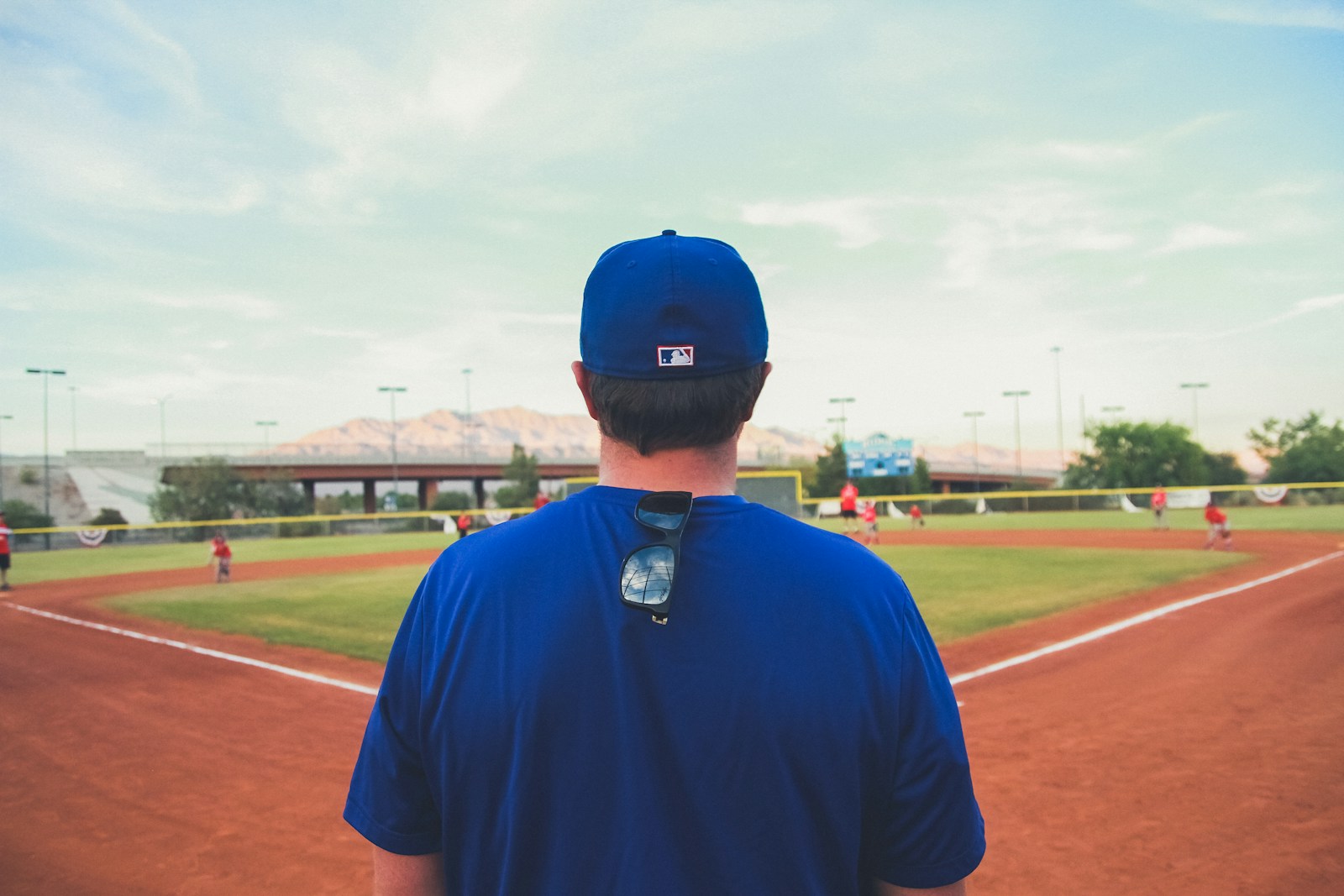
Every parent reading this wants the same thing. They want their kid to get better. They want to be supportive. They want to be involved without being that parent, the one other parents quietly reference in the parking lot, the one their own kid starts dreading on the drive home from games.
Most parents who overstep do not know they are doing it. They are not trying to add pressure or undermine the coach. They are invested in their kid and that investment, without the right channel, becomes a source of friction instead of fuel.
After 21+ years of coaching youth players at every level, I have watched the full spectrum. Parents who made their kids better just by being in the stands. Parents who genuinely hurt their kid's development while trying to help, and who never understood why their son stopped loving the game somewhere around age 13. The difference between those two parents is almost never how much they cared. It is almost always what they did with that care.
This post is the honest version of that conversation.
The Most Important Thing a Parent Can Do
Before we get into specific actions, I want to name the single most important thing a parent can do for a youth baseball player, because everything else in this post builds on it.
Make the car ride home safe.
That is it. That is the foundation. A kid who knows the car ride home after a bad game is going to be a calm, low-pressure environment will play looser, make fewer fear-based decisions on the field, and recover from mistakes faster than a kid who is anticipating that conversation from the third inning on.
Most of the damage I have seen parents do to their kid's development happened in a fifteen-minute car ride after a game. Not because the parent was cruel. Because the parent was invested and could not contain it, and the kid on the receiving end was already emotionally depleted from the game and had nothing left to process the feedback with.
The question to ask on the way home is not "what went wrong" or "why did you swing at that pitch." The question is "did you have fun?" and then silence. Let him answer. Let the answer be enough. If he wants to talk about the game, he will. If he does not, that silence is not a problem to fix.
What Parents Can Do That Coaches Cannot
There is a real role for parents in youth baseball development, and it is different from the coach's role. Understanding that difference is the key to being genuinely useful rather than accidentally counterproductive.
A coach has fifty minutes of practice time, twelve players, and a curriculum to work through. What a coach cannot do is provide the daily, consistent, low-pressure repetition that actually grooves a skill into muscle memory. That is where a parent has a real advantage, if they use it correctly.
Throw with your kid. Not to coach him. Just to throw. Ten minutes of catch three or four times a week, with no instruction, no correction, just throwing back and forth, does more for arm development and love of the game than most parents realize. The conversation that happens naturally during that ten minutes, not about baseball, just talking, is also worth more than any coaching cue you could deliver in the same window.
Be the soft toss partner. If your kid is working on something specific from his lessons, being available to run soft toss in the backyard is genuinely useful. The key word is available, not directing. Ask him what he is working on. Let him run the drill the way his coach showed him. Your job is to toss the ball, not to add your own layer of instruction on top of what he is already trying to process.
Go to professional or high-level games together. We wrote about this in the context of attending a GreenJackets game as a development tool. Watching baseball at a high level with your kid, with a specific focus and a good conversation on the way home, builds pattern recognition and baseball IQ in a way that no amount of backyard work replicates.
Create the conditions for rest. This one is less obvious and more important than most parents expect. Youth baseball players, especially in the travel ball season, are physically and mentally tired more often than they show. A parent who protects their kid's sleep, manages the schedule so there are genuine recovery days, and does not stack training sessions on top of tournament weekends is doing real development work even if it does not look like it.
Where Parents Most Often Accidentally Do Harm
I am going to be direct here because I think vague advice like "just be supportive" is not actually useful. Here are the specific patterns I have seen most often that parents rarely recognize in themselves.
Coaching From the Stands During Games
This is the one most parents know about intellectually and still do without realizing it. A verbal cue during an at-bat, "stay back, stay back" or "quick hands" or "watch the ball," is not support from the stands. It is a second voice entering a player's head during a moment that already requires his full attention. Two voices giving two instructions simultaneously does not produce better execution. It produces a split-focus swing that is worse than either instruction alone would have generated.
During games, your voice should be indistinguishable from any other fan in the stands. Cheer. Clap. Be there. The moment your voice becomes instruction, it becomes interference.
Debriefing the Game the Same Night
I touched on this in the car ride section but it deserves more space. A player who just finished a tough game has used significant emotional and mental resources. His ability to absorb, process, and apply feedback in the hours after a game is genuinely low. Feedback delivered in that window often does not land as coaching. It lands as criticism, regardless of how it is framed, because the player is not in a state to receive it as anything else.
If there is something worth discussing about a game performance, it is worth waiting until the next day, or even the next practice. Feedback absorbed on fresh legs with a rested mind is dramatically more useful than the same feedback delivered at 9pm after a long tournament day.
Contradicting the Coach at Home
This is the one with the most serious long-term consequences. When a parent's instruction at home conflicts with the coach's instruction at practice, the player ends up with two different swings, two different release points, or two different approaches, and neither one gets fully developed because he is always somewhere in between.
I understand this pattern usually comes from a good place. A parent sees something in their kid's swing, googles it, watches some YouTube videos, and genuinely believes they have found the answer. Sometimes they are even right about the problem. But the solution is never to install a parallel coaching track at home that runs counter to what is being built in lessons. The solution is to bring the observation to the coach directly and have the conversation as adults.
If you have a genuine concern about what is being taught in your son's lessons or practice, call the coach. Ask the question. That conversation is always available, and it always produces better outcomes than quietly undermining the coaching at the kitchen table.
Over-Scheduling Without Recovery
The parent who is most committed to their kid's development sometimes creates the environment that is least conducive to it. Private lessons Monday, team practice Wednesday, a clinic Thursday, a tournament all weekend, private lessons again the following Monday. The schedule looks like development. What it actually produces is a fatigued player whose body and mind are not recovering fast enough to consolidate what is being taught.
Development happens during recovery, not during reps. Reps create the stimulus. Recovery is when the body and brain actually adapt to it. A player who is always on and never resting is not developing faster than one with a balanced schedule. He is just accumulating more fatigue and increasing his injury risk.
What to Actually Say After a Bad Game
Since this is one of the highest-stakes moments in a youth player's development and one of the moments parents feel most lost in, here is something specific.
After a bad game, the conversation a player most needs from a parent is not analysis and it is not reassurance that he is still great. Both of those responses, while well-intentioned, make the parent's emotional comfort the center of the conversation rather than the player's actual experience.
What actually helps is acknowledgment followed by presence.
"That was a tough one. I'm glad I got to watch you play."
That is a complete sentence. It acknowledges reality without dramatizing it, and it communicates that your presence at the game was not contingent on his performance. A player who hears that consistently over hundreds of games learns that his parents' love and attention are not performance-based, which is the single most psychologically stabilizing thing a youth athlete can know.
After that sentence, let him lead. If he wants to talk, he will. If he wants food and a different subject, follow him there. His timeline for processing the game is his own, and respecting that timeline is itself a form of support.
The Long View
Here is the thing I want every baseball parent in the CSRA to actually hold onto.
Your kid's relationship with this game at 22 is being shaped right now by the experience he is having at 12 or 13. The parents whose kids still love baseball as adults, who played through high school and maybe beyond, and who look back on those years as genuinely good ones, are almost never the parents who pushed hardest. They are the parents who showed up consistently, kept the car ride home safe, let the coaches coach, and made it clear through their behavior that the game was something their kid got to do rather than something he had to perform at.
The players who burn out, who quit at 14 or 15 with real ability still on the table, almost always have a story that involves a parent who could not separate their own investment in the outcome from the player's actual experience of playing.
You do not have to be hands-off to avoid that outcome. You have to be intentional about what your hands are doing and why.
How MGBA Supports Parents, Not Just Players
At Mind Game Baseball Academy, we think the parent relationship is part of the development program. After lessons and evaluations, we communicate with families directly about what we are working on and why, so parents have real information instead of having to guess. We welcome questions. We welcome the conversation about what you are seeing at home versus what we are seeing in sessions.
What we ask in return is simple: let us coach. Ask us your questions directly. Do not install a parallel track at home. Keep the car ride safe.
If those three things are in place, the parent, the coach, and the player are all pulling in the same direction, and that alignment is genuinely one of the most powerful development environments a youth player can be in.
Book a lesson or evaluation and let's start that conversation.
Frequently Asked Questions
How much should a parent be involved in their kid's baseball development? Involved enough to create the conditions for development, not so involved that you become a second coach. Throw with them, be the soft toss partner, protect their sleep and recovery time, and make the car ride home safe. Leave the instruction to the coaches and let your presence at games be purely supportive rather than corrective.
What should I say to my kid after a bad game? "That was a tough one. I'm glad I got to watch you play." Then let him lead the conversation from there. Acknowledgment without analysis is what most players need in the hours after a difficult game. Save any substantive feedback for the next day at the earliest, when he has had time to rest and reset.
My son's coach is teaching him something different from what I learned. What should I do? Call the coach and ask about it directly. Describe what you are observing and ask them to explain the reasoning. Most coaches welcome that conversation. What does not work is installing a different approach at home without that conversation, because a player trying to execute two conflicting instructions simultaneously develops neither one well.
How do I know if I am overstepping as a baseball parent? Ask yourself one question: does my kid seem relieved when the game is over and we are heading home, or does he seem tense about it? A player who is anticipating the post-game conversation is carrying that anticipation during the game itself. If your son plays looser when you are not there than when you are, that is clear information about what your presence is communicating.
Is it okay to coach my kid at home between practices? Only if you are running drills the coach has already assigned and you are not adding your own instruction on top of them. Being the rebounder, the soft toss partner, or the catch partner is genuinely useful. Delivering your own swing analysis in the backyard alongside what the coach is already teaching is genuinely harmful, even when your analysis is correct.
Kenny Flermoen is the Founder and Academy Director of Mind Game Baseball Academy, based in North Augusta, SC. He brings 21+ years of coaching experience from tee-ball through Division I, a B.S. in Sports Management, and a Master's degree in Coaching and Athletic Administration from Concordia University-Irvine.
Related posts